
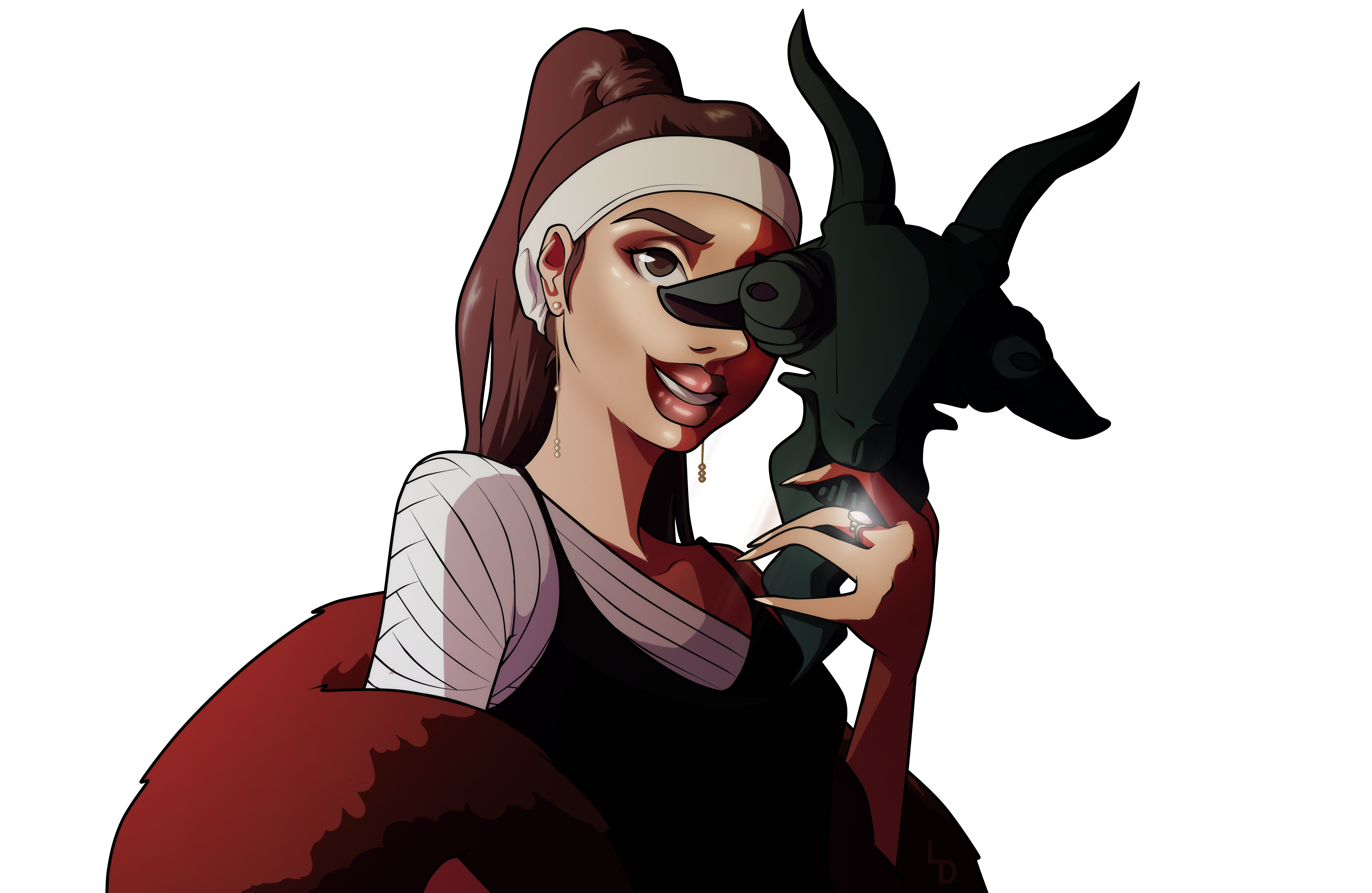
Jessy on hiatus, musing about scene writing

As session 8 concludes, we find Jessy unconscious and facing an uncertain fate. Well… not entirely uncertain. She will return at the start of next year, facing new challenges and getting further involved in the madness that seems to surround her. This campaign is an undertaking. It’s bigger than I first anticipated when I started writing and certainly bigger than anything else I’ve done in this style. I come from a D&D background, so my concept of campaign writing was largely limited to building dungeons with more rooms and cooler monsters. More narrative-driven games, such as Kult or Tales from the Loop (another favorite of mine), are newcomers to my game arsenal, and so Jessy’s Story has been an opportunity for me to learn. A lot.

For instance: I think I have finally figured out how I like to write scenes! In the past, I’ve always written my own scenarios and campaigns in terms of locations and events, but Kult: Divinity Lost and many other narrative-heavy RPGs ask you to think in terms of scenes. This was a huge change for me, and I’ve stumbled quite a lot with it. I expect myself to stumble for several more years before it becomes easy for me. Even so, I’ve now come up with a way for me to write scenes that I enjoy and think works for me.

Continue reading “Jessy on hiatus, musing about scene writing”
Session 8: Wilma

This is a session recap for a Kult: Divinity Lost roleplaying campaign. Jessy Button is played by my wife, who also does the art, and I am the game master.

This post contains violence.

PreviousNext

Jessy’s left shoulder has started to hurt, the wound from her clash with the monster getting worse by the hour. She talks with Honey about her plan – go back to the sewers they found themselves in earlier, and try to find a way up from there. Honey has his doubts, but Jessy has the flashlight. They snake their way back the way they came, often turning off the flash light in the long corridors to conserve battery. Darkness and silence, interrupted only by their own footsteps and the occasional flickering emergency light embedded in filth. They find their way back to the stinking sewage, and explore from there. Somewhere out in the darkness, a person calls out for help. Jessy turns the flashlight off and makes sure both her and Honey stay quiet. Splashing in the water and the panicked voice of a young woman pass them by, and Jessy waits until she’s long gone before they continue moving. She can’t afford another person slowing them down, if it even was a person. Hard to know in this place.

Continue reading “Session 8: Wilma”

Thoughts on player agency

I often end up in discussions about roleplaying games with friends who share the interest, and recently a topic that’s come up multiple times is this:

How much should the Game Master allow the players to affect the story’s outcome?

Now, the short answer to this is obviously ‘it depends’, but that doesn’t make for a good blog post. So instead, I will explore in some detail my thoughts on how I, as a GM, approach writing depending on what kind of game I am running. I will here make the same separation as the upcoming Alien: The RPG by Free League, and I will praise it for its decisions any time I talk or write about this. In Alien, gameplay is strictly split up into two categories: Cinematic Play and Campaign Play.

  • Cinematic Play involves playing a published, or at least pre-written, scenario. It is separated into Acts, has pre-written characters with their own agendas specific to the scenario, and is generally meant to be played until it’s done and not continued past that point.
  • Campaign Play instead allows the players to create their own characters, give them flair and backstory and rapport, and then explore the universe of Alien as the GM gives them new challenges based on their choices.

Both of these forms of play should be familiar to seasoned roleplayers, but it is the strict distinction in Alien: The RPG that makes it interesting. In Alien, premade cinematic scenarios will (so far as I can understand) always involve pre-made characters, while campaign play should always (again, to my understanding) demand of the GM to write and adapt. Alien even goes so far as to make the rules different for cinematic and campaign play. This makes me really excited, because it is almost exactly how I like to think about writing for other games, specifically Kult: Divinity Lost. Let us cover some terminology to make sure we are on the same page.

Continue reading “Thoughts on player agency”

Session 7: Desperate Measures

This is a session recap for a Kult: Divinity Lost roleplaying campaign. Jessy Button is played by my wife, who also does the art, and I am the game master.

This post contains sex, violence and gore.

PreviousNext
Jessy makes her way back to the apartment she’s currently staying at – Ethan, a college student living with two roommates, allowed Jessy in after hearing about her break-in. Ethan is in his room when she comes to grab new clothes. If she’s going for a shower, he’d love to join. Jessy relents1, and hurries to hide her blood-drenched clothes at the bottom of her bag of makeup before Ethan comes into the bathroom. She can’t hide the bruises Tan gave her, but explains it away by being ‘oh so clumsy’. Ethan, overjoyed at having Jessy naked with him, doesn’t question her further. 1 Influence Other
Result: <9
Continue reading “Session 7: Desperate Measures”

Session 6: Sadism

This is a session recap for a Kult: Divinity Lost roleplaying campaign. Jessy Button is played by my wife, who also does the art, and I am the game master.

This post contains violence and gore.

PreviousNext

After texting Carl Hunt, her kind sugar daddy, about the break-in, Jessy quickly has to clean herself up and put on clothes that cover her bruises from the night before. He’s going to come over. They’ve never met before, but this is his apartment and he needs to survey the damage. Carl is quick to get comfortable with Jessy once he arrives, hugging her close and petting her head as she explains with some panic in her voice how she has no idea why this has happened, that she was studying at a friend’s place and came home to this.

Carl is worried. The police have not taken what happened to Jessy at the hotel seriously, assuming it a strange scam, and now this. Because nothing was stolen, he feels it may be viewed as a poor attempt at insurance fraud, and he would rather not get involved in that. It may reveal his relationship with Jessy to his family, which is the last thing he needs. Instead, he promises Jessy that he’ll get a private investigator on it, and eventually sort out a place for her to stay. Jessy makes him promise this will all be alright. For the moment, she’ll have to stay with friends. She is given a kiss goodbye when Carl leaves.

Continue reading “Session 6: Sadism”

Tarot Characters: Joanne

Greetings Kultists! I have mentioned before that I love the Kult tarot deck (in fact, I have a category on the blog specifically for it!). I wrote a post detailing a method for creating characters for Kult using the tarot deck, and last week I sat down and did this with the wife again! I performed the reading, we both came with suggestions and ideas for how the cards might be interpreted and what stories one might tell. Once the reading was done, we picked a Dark Secret, Disadvantages and Advantages and created a more or less complete character, ready to be played! This is her.

Continue reading “Tarot Characters: Joanne”

My (lack of) planning

Hello! I have been busy this last while. Lots of work and in-laws visiting for a week means I haven’t been able to write much for myself or the blog! Such is life, isn’t it?
Reminder on that subject: Jessy’s Story session 6 will be one week delayed.

When I write scenarios for Kult, or really any roleplaying game, I tend to keep my notes sparse. Some would say very sparse. I do not often write full scenes, nor often detailed character descriptions. Fish tanks, locations, intrigue maps, stat blocks… none of it! It’s not that I think I wouldn’t find use for these things, but rather that I am not sure it is worth the effort for me a lot of the time.

So what do I have in my notes? Short answer: a mess. I write something down, leave the document, come back a day later and write down something else entirely unrelated. I tend to focus on writing down things that either serve as the basis of a plot point, or inspiration for how to narrate. Everything else, I’ll either keep in my head or come up with on the spot. I can’t remember when I first started relying so heavily on improvisation even for regular play, but I now improvise nearly everything I do when GMing.

I am unsure how common this practice is. I’ve been GMing for nearly 14 years at the time of writing, and very rarely have I been a player or seen another GMs actual work notes. Perhaps it is the same for you? Now is the time to compare!

Here are my full work notes for a two-session scenario I played with my wife and good friend Casey while we were out on a camping trip. My concept was that I wanted to play through Slenderman (2018), but make it better than the movie. I am not sure I succeeded in the end, which is embarrassing, but the players had a good time which is my number one priority.

That is all I wanted to share today. 🙂 Do you write more thorough notes than this? Or do you keep it sparse and just trust yourself that you’ll deliver? Talk about it!

Session 5: Transcendence Denied

This is a session recap for a Kult: Divinity Lost roleplaying campaign. Jessy Button is played by my wife, who also does the art, and I am the game master.

This post contains rape.

PreviousNext

Tan drives to a nearby hotel and gets Jessy and himself a room with a view overlooking downtown Toronto from a distance. The snow makes it nothing more than a dim outline, bright spots in the sky marking the CN tower. Tan brings from his car a black sports bag, which contains candles and odd trinkets. He begins setting these things out while Jessy has a shower and cleans herself up. When she comes out from the bathroom, the hotel room is illuminated by candles burning on every surface. A half-circle surrounding a circular steel medallion on the side table, a triangle of six tall candles on the desk, and on the shelf above the desk a sizable statuette.

Continue reading “Session 5: Transcendence Denied”

The Kult Take: Jacob’s Ladder

For this recurring segment of Beyond Elysium, I will step away from the nepharites and have a Kult-inspired look at other horror media. Welcome to The Kult Take.

Hello and welcome! This time on The Kult Take, we are delving into the madness of Jacob’s Ladder. This one’s been brought up many times in discussions about Kult-like films, and finally watching it after years of putting it off makes me understand why. It feels almost deliberately Kultish at times, until you remember that the film was released in 1990, a year before Kult first hit toy store shelves in Sweden and caused all sorts of ruckus.

Jacob’s Ladder blew me away. It’s a movie which defies a singular interpretation, and deliberately so. It is a movie which contradicts itself and hints at all sorts of possible truths. If you disagree with my understanding of the film, I encourage you to comment with your own thoughts.

SPOILERS AHEAD.

Continue reading “The Kult Take: Jacob’s Ladder”

Nahemoth’s Subtle Influence

Trash is everywhere.

You may not always notice it when driving or walking through a city, but it is ever present. Cigarette butts roll across sidewalks, plastic bags drift through the wind, and thousands of half empty coffee cups are left at bus stops ten feet away from the nearest garbage bin. The remains of McDonalds’ meals scatter across parks and parking lots, and dog shit is only one unlucky step away. City folk live with this. They get annoyed with it, zone it out, contribute to it. In the end, it does not matter to them. Cities are not clean.

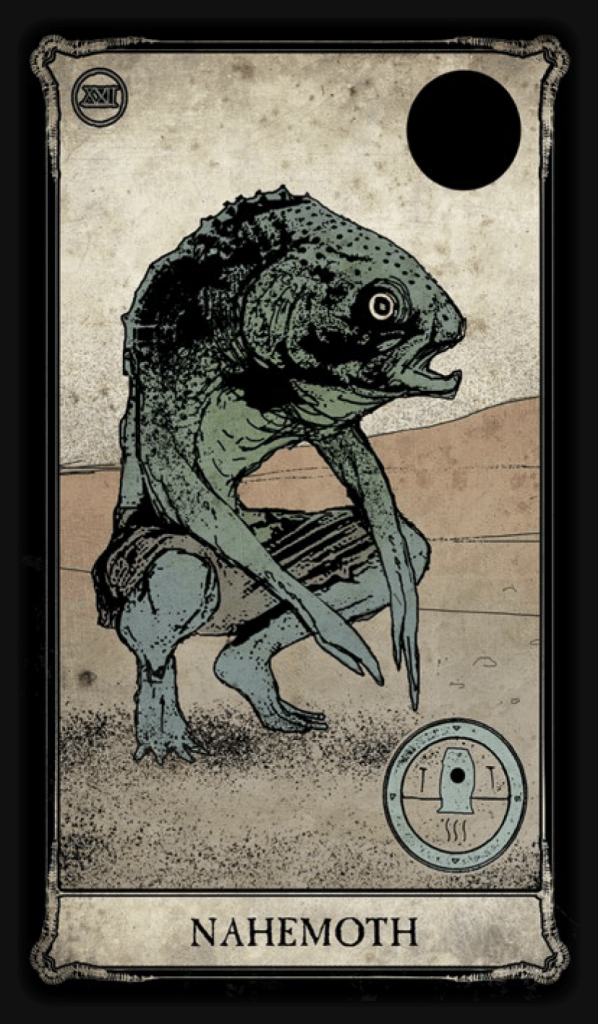
We know Nahemoth as the smog which chokes out the cities, as rivers polluted with chemicals. Nahemoth is the plastic killing marine life, the wildfire started from a shattered glass bottle, and the large-scale despoiling of all we find beautiful on our planet. If Malkuth was the conformity and logic of nature, Nahemoth is the chaos of nature, the senseless destruction brought through it and to it. She makes us fear that destruction, whether it be with lightning bolts or acid rain. She also guides us to feed it, to make her influence ever stronger and more violent.

The corruption of nature has to start somewhere. It starts with us. The influence of Nahemoth is more insidious than spectacular violence. She will gleefully use the filth and ruin we provide her. She lives with all of us, and affects us on a very personal level. We invite her into our life every time we litter. The unwillingness to recycle, the lackadaisical attitude of your trash being someone else’s problem, it all comes from her and it is pervasive.

Nahemoth strives to create an atmosphere of helplessness against the ruination of nature. If we do not know how to combat it, or are convinced that the situation either can’t or doesn’t have to be fixed, we will continue to feed her. Her clergy and servants will tell you that green fuel is a bad idea. They will tell you that separating your trash and recycling is a waste of time. They proclaim that climate change has gone too far already, and that humanity is already on an irreversible path towards death. Everything you can do to hinder her, you won’t do because she will convince you that it’s never worth it.

So throw your batteries in the river. Continue buying your plastic bags by the dozen and toss them out the car window on your way home. Leave that Starbucks cup right on the sidewalk.

What could it possibly hurt?